
Why Dogs Become Aggressive — Understanding the Real Causes Behind the Behaviour
- pringlepawz
- Oct 10, 2025
- 4 min read
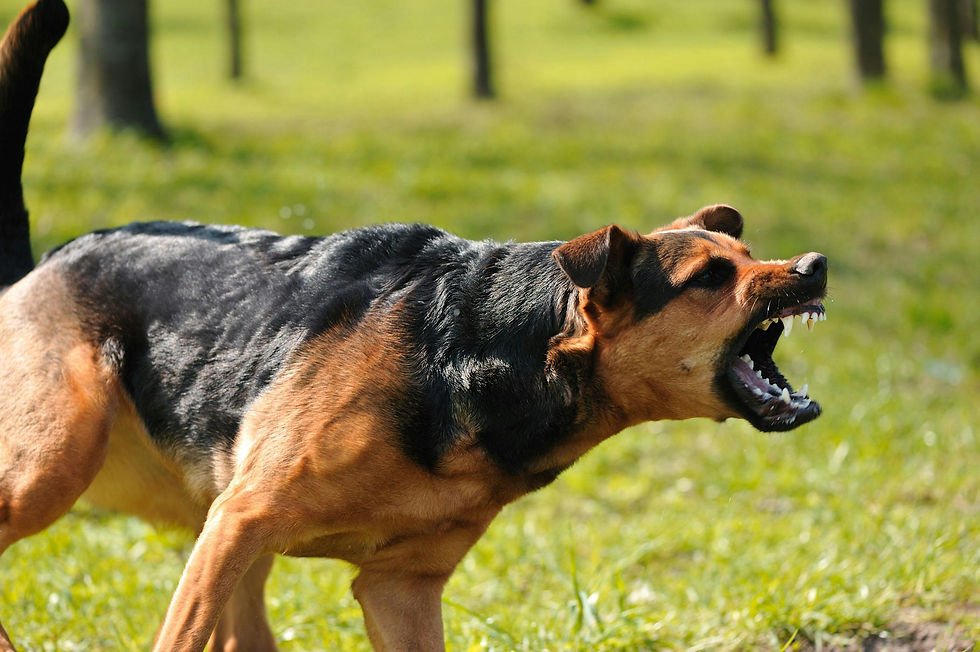
Aggression in dogs can be worrying and, at times, distressing for owners. When a normally friendly companion starts growling, snapping, or lunging, it’s natural to wonder what went wrong. The truth is, aggression is rarely about dominance or “bad” behaviour — it’s a form of communication.
At Pringle Pawz, we help owners understand the emotional roots behind aggression and guide them toward calm, confident relationships with their dogs. Let’s explore why dogs may become aggressive, and how professional support can make a life-changing difference.
Aggression Is a Symptom — Not the Cause
Aggression isn’t a personality trait; it’s a response. When a dog shows aggression, they’re often saying, “I feel unsafe,” “I’m in pain,” or “I don’t know how to handle this situation.”
Common signs of aggression include:
Growling or showing teeth
Snapping or biting
Stiff body posture or intense staring
Lunging or barking at people or dogs
Understanding the why behind these behaviours is the key to resolving them safely and compassionately.
1. Poor Socialisation: Fear of the Unknown
Early socialisation — the period between roughly 3 and 16 weeks of age — is when puppies learn about the world. Positive exposure to people, dogs, sounds, and new environments helps them grow into confident adults.
When a puppy misses this crucial window or has negative experiences, they may grow up fearful or uncertain. That fear can easily turn into defensive aggression when they feel overwhelmed.
For example:
A dog that never met other dogs as a puppy might bark and lunge on walks.
A dog that wasn’t handled by different people may growl when strangers approach.
The good news is that with gentle desensitisation and positive training, even poorly socialised dogs can learn to feel safer. At Pringle Pawz, we take a gradual, supportive approach that rebuilds trust and confidence step by step.
2. Genetics: Nature Plays a Role Too
Just like people, dogs inherit certain temperament traits from their parents. Genetics can influence how confident, anxious, or reactive a dog may be. Some breeds were also developed for protective or guarding instincts — behaviours that can look like aggression if not properly channelled.
However, genetics alone don’t determine a dog’s fate. A well-bred, well-raised puppy with a solid social foundation and consistent, kind guidance can thrive regardless of breed tendencies. Problems arise when genetic predispositions combine with stress, fear, or lack of guidance.
If your dog shows sudden or intense aggressive behaviour, it’s also wise to rule out medical causes such as pain, hormonal changes, or neurological issues. A vet check is always the first step.
3. Poor Leadership and Inconsistent Boundaries
Dogs thrive on structure and clear communication. When they don’t understand what’s expected of them, or when rules change frequently, they can become anxious or confused.
This uncertainty may lead to frustration, guarding, or even aggression — especially if the dog feels responsible for managing situations themselves.
“Leadership” doesn’t mean dominance or control. It means providing calm, consistent guidance so your dog feels secure knowing you’re in charge of keeping them safe. At Pringle Pawz, we teach owners how to lead with confidence and empathy, using positive reinforcement to encourage cooperation, not fear.
Simple leadership skills include:
Setting predictable routines
Rewarding calm behaviour
Managing triggers instead of punishing reactions
Staying calm and consistent
Dogs mirror our energy. When we’re confident and steady, they learn to relax and trust our direction.
4. Learned Behaviour: When Aggression “Works”
Sometimes, aggression becomes a learned response. If a dog growls at another dog and that dog moves away, the growling is reinforced — it worked. Over time, the behaviour repeats because it successfully removes the perceived threat.
That’s why punishment or harsh corrections often make aggression worse. They may stop the growling momentarily but increase fear, leading to more unpredictable reactions later. Instead, we teach dogs alternative behaviours — like looking to their owner for reassurance — so they learn safer, calmer responses.
5. Stress and Environment
A dog’s surroundings and daily routine play a huge role in behaviour. Lack of exercise, overstimulation, inconsistent handling, or chaotic environments can all contribute to frustration and tension.
Calm, balanced environments — paired with mental stimulation and positive outlets for energy — help prevent behavioural issues before they start.
How Pringle Pawz Can Help
Every aggressive dog is unique, which means there’s no one-size-fits-all solution. At Pringle Pawz, we take a holistic, compassionate approach that includes:
A detailed behavioural assessment
Identification of triggers and underlying emotions
A tailored training and management plan
Ongoing owner support and progress check-ins
Our goal is to help you understand, not just manage, your dog’s behaviour — building a relationship based on trust, safety, and respect.
A Path Toward Calm and Confidence
Aggression can feel overwhelming, but it’s not a life sentence. With patience, consistency, and the right professional guidance, most dogs can learn new ways to cope and respond.
If your dog is showing signs of aggression, don’t wait for things to escalate. Compassionate help is available — and it can make all the difference.
👉 Book your behaviour consultation with Pringle Pawz today and take the first step toward restoring peace, safety, and confidence in your home.


